
50 Moments From 50 Years of ET Group
50 Moments From 50 Years of ET Group
With roots in Toronto dating back to 1976, we’ve grown alongside the technology that shapes how people communicate, collaborate and connect.
Over five decades, a lot has changed — the technology, the projects, the places we work and the scale of what we do. Along the way, we’ve welcomed new people, built lasting relationships and continued to evolve with the needs of our customers.
Behind every milestone are the people, projects and ideas that have helped move us forward.
To celebrate our 50th anniversary, we’re looking back at 50 moments that have shaped our story — and helped create the foundation for what comes next.

Our Roots and Evolution
1. Our Story Begins in 1976: Our history traces back to Pistil Enterprises Ltd., founded in 1976, and its later evolution alongside Sound Power Luminescence. In 1991, Pistil Enterprises Ltd. took over Sound Power Luminescence, helping create the foundation for who we are today. That history is why 1976 remains the starting point in our story — marking 50 years of growth, change and evolution in 2026.

2. From Traditional AV to More Connected Technology: In our earlier decades, our work included installed sound systems, amplifiers, speakers, wired microphones, projection screens, slide and film projectors, and early video and television systems. As the technology advanced, meeting and presentation spaces began bringing more of these tools together. Projection gave way to digital displays, laptops became part of the meeting experience, and interactive presentation and collaboration technology created new ways for people to share and work with content.

3. Expanding Into Hospitality and Entertainment: Our portfolio also grew across Toronto’s restaurant, nightlife and entertainment scene. We supported recognizable hospitality brands with audio, video, displays and control systems designed around the guest experience. From walls of screens showing sports and entertainment to custom AV control behind the scenes, these projects showed how technology could become part of the atmosphere and experience of a space.

4. Growing Into Integrated Corporate AV: As workplace technology evolved, our corporate projects evolved with it. Boardrooms and meeting spaces increasingly brought together videoconferencing, displays, presentation technology, room control, tabletop connectivity and dedicated AV infrastructure. Rather than operating as separate pieces, more of the technology in the room began working together as one integrated system.

5. From Individual Installations to Enterprise Scale: As our capabilities and customer base grew, the projects got bigger too. What might once have involved a single system or location can now mean designing, deploying and supporting hundreds of spaces across offices, campuses and multiple locations. At that scale, consistency matters — from how rooms are designed and deployed to how they’re supported long after installation.

6. Our Toronto Roots: Our home has changed a few times over the years, with each location marking a different chapter in our growth. Our Toronto and Etobicoke addresses have included 500 King Street West, 90 Thorncliffe Park Drive, 500 and 524 Front Street West, 29 Booth Avenue and, since 2022, 130 North Queen Street in Etobicoke. From our earlier downtown locations to where we are today, the spaces we’ve worked from have grown and changed right alongside us.

7. Built on Long-Standing Relationships: Some of the relationships behind our work have lasted for decades. Several team members have built long careers here, with some approaching 40 years with us, while customers and technology partners have continued to grow alongside us. That shared history has created a depth of knowledge and familiarity that can only come with time.

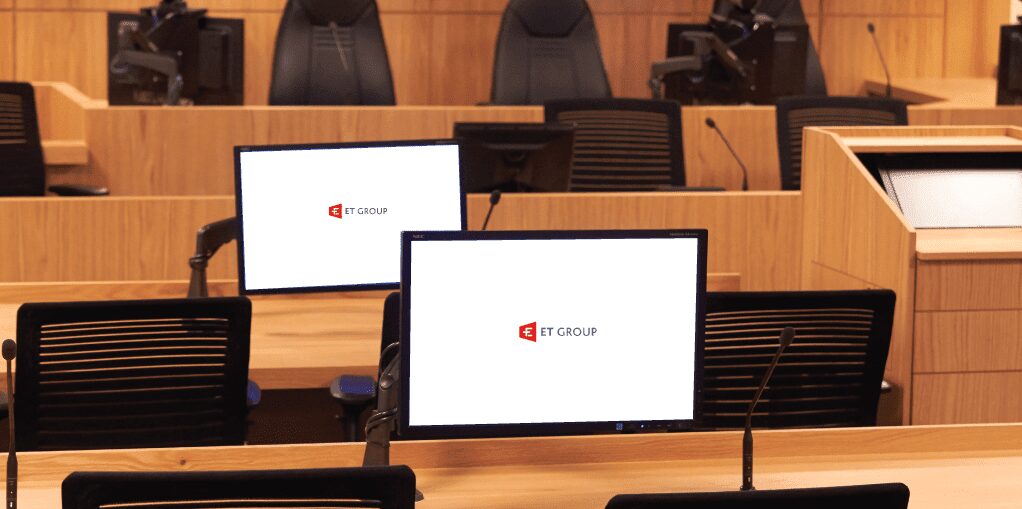
8. Trusted in Complex and Mission-Critical Environments: Over the years, we’ve built deep experience in justice, government and other environments where technology simply has to work. Courtrooms, correctional facilities, command centres and other highly regulated spaces come with requirements around security, reliability and day-to-day performance that go well beyond a typical meeting room.
Building a National Presence
9. Growing Beyond Toronto: We started in Toronto, but our footprint has steadily grown across Canada through acquisitions, new offices and a more distributed team. Today, we have employees based in British Columbia, Alberta, Ontario, Quebec, Prince Edward Island, Nova Scotia and New Brunswick.

10. Welcoming CONTI and Forte: In September 2022, we acquired CONTI Electronics’ audiovisual design and integration business assets, including the CONTI and Forte brands. The acquisition brought CONTI and Forte employees into our team and established a Vancouver presence, supporting our continued growth in Western Canada.

11. Expanding into Atlantic Canada: In 2023, we opened a new office and technology demonstration facility in Fredericton, New Brunswick. Now known as the Fredericton Experience Centre, it gives customers and partners a place to experience workplace technology firsthand across collaboration, personal, social and justice spaces.

12. Extending Our Reach Through Ricoh Canada: Joining Ricoh Canada in 2026 added a broader Canadian office and service network to the footprint we had already built, giving our teams access to additional resources and support across the country.
Behind the Work
13. A Home That Reflects the Work We Do: Our current North Queen headquarters is more than office space. It brings together people working across different parts of the business with areas for collaboration, staging, service and the hands-on technical work that happens before and after a system reaches a customer site.

14. Building and Testing Before We Reach Site: A lot happens before an installation ever reaches a customer. Our in-house staging and pre-build process gives our teams space to build, configure, label and test systems ahead of deployment, helping catch issues early and making onsite work more predictable.

15. The Service Work Customers Don’t Always See: Installation is only one part of the lifecycle. Behind the scenes, our service and onsite support teams troubleshoot issues, prepare equipment, maintain systems and help keep technology working once it is in use. Some of that happens at customer sites, while some happens from our own service and support areas.

16. Different Specialists, One Project: A finished space can involve people across strategy, design and engineering, programming, project delivery, installation, unified communications and ongoing support. Each sees a different part of the project, and complex environments often depend on several of those disciplines working together from the earliest design conversations through deployment and support.

17. Thinking About Virtual Work Before It Became the Norm: Flexible and virtual work were already part of the conversation well before hybrid work became commonplace. In 2017, Dirk Propfe was featured on the cover of Ivey Business School’s Intouch magazine for a story on “Virtually Virtual,” reflecting on virtual teamwork and why it could work for organizations. It’s an interesting snapshot of how early questions around remote collaboration, trust and the workplace were already becoming part of our story.

18. Bringing Human-Centered Thinking Into Our Technology Work: The way we thought about our own workplace also began influencing how we approached technology for customers. Rather than starting with products or equipment, the focus increasingly shifted toward the people using a space — how they work, how they need to collaborate and what the technology needs to make easier. Dirk later shared that approach through Human-Centered Technology Design for a Hybrid World at WORKTECH Toronto.
Recognition Along the Way
19. Seeing the Transformation Take Hold: The changes weren’t limited to organizational structure. Collaborative workshops, ET Connects and other opportunities for people to contribute ideas became a more visible part of how we worked together. By February 2022, we reported a 95% employee retention rate and an employee Net Promoter Score consistently above 50. We also reported profitability at 2.5 times the industry standard and four times the growth we had experienced in 2016.

20. Recognized for a Different Business Strategy: In 2018, we received an NSCA Excellence in Business Award in the Differentiating Strategies category, recognizing our move toward design thinking, participatory leadership, self-management and a more consultative approach to workplace technology.

21. Named Pexip’s Most Agile Partner: In 2021, we were named Pexip’s Most Agile Partner of the Year at the Pexip Americas Partner Leadership Summit, recognizing our ability to adapt quickly and find collaboration solutions around specific customer needs.
22. Receiving the Inaugural Tony Hsieh Award: In December 2021, Dirk accepted the inaugural Tony Hsieh Award in Las Vegas on our behalf. The award recognized the work we had done to explore more empowering and participatory ways of working. (Read the story behind the transformation and its impact.)
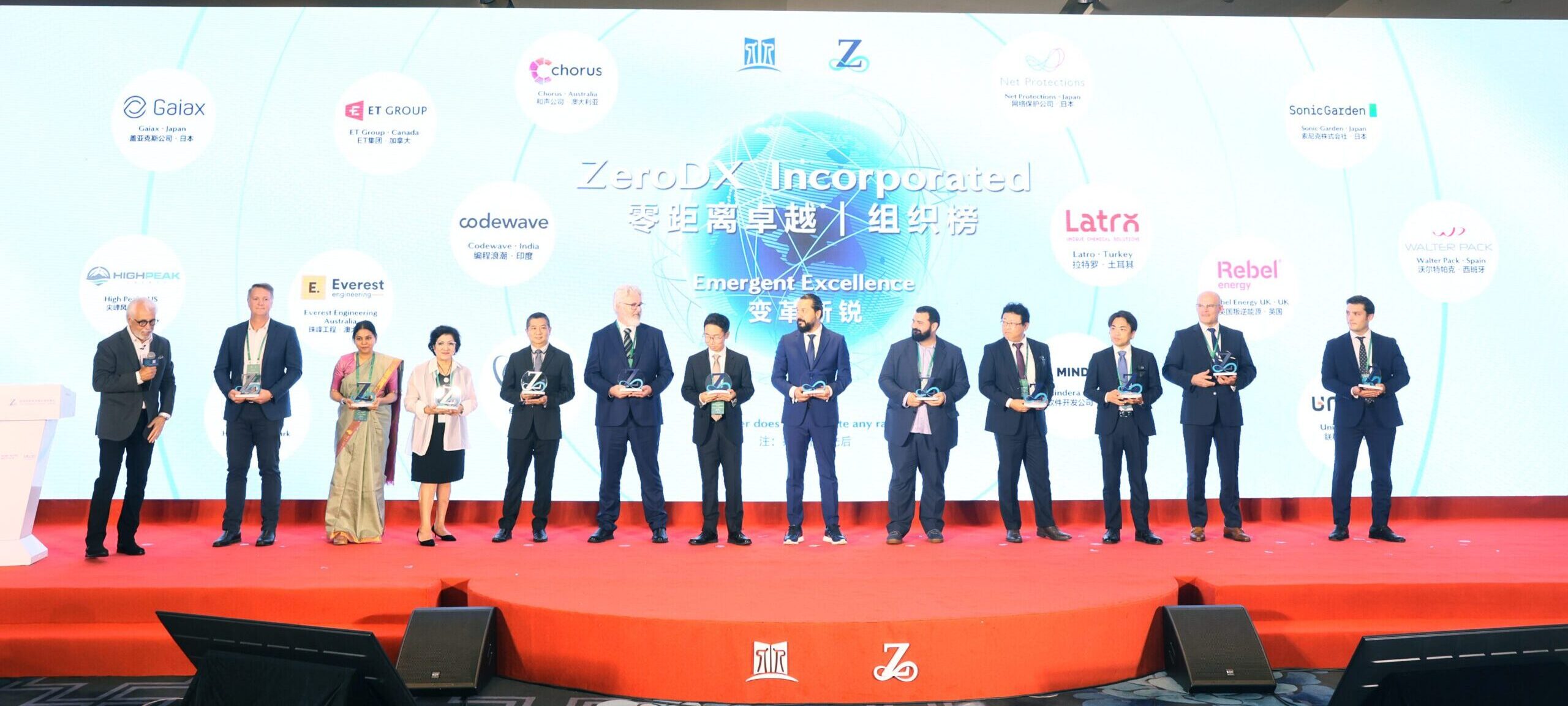
23. Taking Our Story to a Global Stage: In 2024, we received the Zero Distance Excellence Award for Emergent Excellence. Mark Chen represented us at the Zero Distance Excellence Summit in Qingdao, China, where he accepted the award and joined organizations from around the world in conversations about self-management, decentralization and customer collaboration.
24. Building a Multi-Year Record as a Best Workplace: Since becoming Great Place to Work® Certified in 2023, we’ve received recognition across several workplace categories. In 2025, our growth placed us among Canada’s Best Workplaces for organizations with 100 to 999 employees, where we ranked #15 in Canada. We were also recognized among Canada’s Best Workplaces in Technology, for Mental Wellness and with Most Trusted Executive Teams. In 2026, we ranked #30 and received the Fairness Award, alongside recognition for Inclusion, Technology and Most Trusted Executive Teams. (Explore our workplace awards and recognition.) 
Projects Across the Years
25. Supporting Justice Environments at Scale: We have designed, implemented and supported secure AV systems across courtrooms and correctional environments, and by the end of 2026 that footprint is expected to exceed 1,000 justice spaces. The work supports remote appearances, interpretation, evidence presentation, accessibility and other functions where reliability and security are critical. (Explore our justice technology solutions or see the case study behind this work.)

26. Growing with GreenShield Across Seven Cities: Since 2017, we have completed 57 AV projects with GreenShield across seven Canadian cities. The relationship has grown across executive boardrooms, hybrid rooms, multipurpose environments and other workplace spaces while supporting greater consistency across locations.

27. Building a Nationwide AV Standard with Sobeys: In 2024, we partnered with Sobeys on more than 12 AV projects across Canada. Through discovery sessions and stakeholder engagement, we developed repeatable designs for executive rooms, training spaces, huddle rooms and town halls, creating a more consistent hybrid meeting experience across locations.

28. Supporting Hybrid Learning and Collaborative Research: Our work in education has included a range of approaches to teaching, learning and collaboration. At BCIT, we helped connect existing video technology with newer collaboration platforms to support campus-wide hybrid learning. Our work with York University’s Lassonde School of Engineering included an interactive virtual classroom, while at OCAD University we supported collaborative research spaces designed around accessibility and participation.
29. Technology Across the Campus Experience: Our education work also extends beyond traditional classrooms. At the York University Student Centre, technology helped create a more connected social and community space for students. Our work with a leading Canadian independent school has grown across more than 25 projects and two campuses, spanning classrooms, gymnasiums, a swimming pool, boardrooms, multipurpose spaces and shared areas.

30. Bringing the Cisco Innovation Centre to Life: At Cisco’s Toronto Innovation Centre, we helped create a flexible environment for demonstrations, training and global collaboration. The project brought together cross-platform videoconferencing, intelligent cameras, ceiling microphones, touch control, wireless content sharing, digital display pillars and a multi-panel video wall.

31. Creating an Immersive Digital Experience at B6: At Bentall GreenOak’s B6 building in Vancouver, we helped transform a large architectural surface into an immersive digital canvas combining a large-scale video wall, custom content and discreet audio. The installation also created a platform for showcasing work from local artists.

32. Designing Around Sagamok Anishnawbek’s Council Circle: We partnered with Sagamok Anishnawbek on a hybrid-ready Council Chamber built around the Nation’s circular Council layout and governance practices. Microsoft Teams Rooms, Televic Plixus and individual uniCOS units were brought together alongside custom nameplate overlays and VR design work to support the unique environment.

33. Standardizing 176 Rooms Across 40 Locations: For a leading Ontario utility, we designed and deployed AV across 176 rooms spanning 40 locations. The work ranged from smaller collaboration spaces to executive environments, with standardized room templates, centralized conferencing and remote monitoring helping make a large distributed environment easier to deploy and support.

34. Connecting Technology Across an Entire Headquarters: For a leading Canadian dairy provider, we helped create a Toronto headquarters where technology extends across huddle rooms, boardrooms, collaboration spaces, digital signage and larger Town Hall and streaming environments. The project also used CAD and VR planning and incorporated existing equipment where it continued to serve a purpose.

35. Supporting Infrastructure Teams Across Eight Locations: Since 2022, we’ve delivered more than 10 AV projects across eight locations for a leading Canadian infrastructure organization. Standardized meeting environments connect executive leadership, regional offices and project teams whose decisions can directly affect active job sites.

36. Building an 8K Centrepiece at GreenShield: At GreenShield’s downtown Toronto office, we helped deliver a 10-foot-high, 27-foot-wide video wall with 8K native resolution. People-tracking cameras add an interactive element, allowing content to respond as people move through the space. The installation is another chapter in our long-standing work with GreenShield.
37. Modernizing Secure Collaboration at RBC: Our work with RBC has included modernizing executive and meeting environments to create more intuitive, hybrid-ready collaboration while meeting the reliability and security needs of a major financial organization.

Learning and Staying Connected
38. Bringing Global AV Insights Back from ISE: Our teams attended Integrated Systems Europe in Barcelona in both 2025 and 2026, meeting with global manufacturers and partners while exploring developments across unified communications, LED, audio, workplace management, immersive AV and smart-building technology.

39. Staying Close to the Collaboration Technology Ecosystem: Enterprise Connect and Cisco WebexOne have given members of our team a closer look at developments in AI, collaboration platforms, room systems, security, governance and interoperability while strengthening relationships with the partners behind many of the technologies we work with every day.

40. Sending Our Largest Team Yet to InfoComm: In 2026, we sent our largest team to date to InfoComm in Las Vegas, with people representing Growth and Innovation, Design and Engineering, Customer Engagement, Project Delivery and Vendor Relations. It gave people from different parts of the organization a chance to explore new technologies, meet partners and bring ideas back into their own areas of work.

Supporting the Full Lifecycle
41. Managing More Than 200 Rooms Proactively: For a major Canadian financial institution, we introduced Remote Monitoring and Management across more than 200 meeting rooms nationwide. The program reduced average issue-detection time by 98.7%, lowered support-ticket volume by 75% and produced more than $100,000 in annual support and energy-related savings.

42. Embedding Technicians Across 135+ Spaces: Our Meeting Room Technician programs place dedicated AV specialists directly within customer workplaces. For one global financial client, our embedded technician team supports more than 135 spaces across Toronto, London and other global locations, including executive boardrooms, hybrid classrooms and mission-critical environments.

43. Expanding Our Work in Justice and Corrections: As our justice work grew, so did the range of environments we supported — from courtrooms to correctional facilities. That included purpose-built solutions such as Video Remand Cabinets, designed to support secure virtual appearances and communication, alongside courtroom collaboration, remote monitoring and ongoing AV support.

44. Seeing a Space Before It Exists: We’ve used immersive VR design reviews to let customers experience proposed spaces before construction or installation begins. Stakeholders can walk through layouts, assess displays and sightlines, review camera coverage and make decisions while changes are still much easier to make.

45. Connecting Old and New Technology: Not every modernization needs to begin with replacing everything. Across projects in education, energy and enterprise environments, we’ve helped customers connect existing video systems with newer platforms such as Microsoft Teams, Zoom and Webex. For one Ontario energy provider, interoperability allowed existing systems to work with newer cloud collaboration platforms without requiring an immediate rip-and-replace.

46. Building Sustainability Into the AV Lifecycle: Our approach has included maintaining and reusing equipment where it still has value, replacing individual components where possible, reducing unnecessary site visits through remote support and directing end-of-life equipment toward responsible reuse or recycling. (Read more about our approach to a more sustainable AV future.)

47. Staying Involved After the Installation: Many of our customer relationships continue long after a room goes live. Help desk support, onsite technicians, preventative maintenance, remote monitoring and ongoing optimization all play a role in keeping spaces working as technology, workplaces and customer needs continue to change.

The Next Chapter with Ricoh
48. Beginning Our Next Chapter with Ricoh: On February 2, 2026, we announced that we had joined Ricoh Canada as a wholly owned subsidiary. It marked one of the biggest changes in our 50-year history and the beginning of a new chapter — one that allows us to build on what we’ve created while becoming part of a much larger organization. 
49. Preserving Who We Are: We continue to operate under our existing brand and leadership team, with customers working with the same people and teams they already know. As we move forward with Ricoh, we’re continuing to build on the relationships, experience and specialized expertise developed over the past 50 years.
50. Combining Our Expertise with Ricoh’s Scale: Our next chapter brings our AV design, integration, unified communications and managed workplace expertise together with Ricoh’s broader resources, digital capabilities and service coverage. Together, we can support more of the workplace technology lifecycle while continuing to bring the hands-on approach our customers know us for.

Looking Back — and Moving Forward
Our story has been shaped by five decades of people, projects, customer relationships and turning points.
Some of that history can be seen in the finished spaces. Some of it lives behind the scenes — in old project photos, equipment racks, design drawings, staging work, service calls and the people who have spent years learning how to make increasingly complex systems work.
Together, these milestones show just how much has changed, from our early Toronto roots and individual AV installations to projects spanning hundreds of rooms and locations across the country.
As we begin our next chapter with Ricoh Canada, we’re carrying that experience forward. Technology will keep changing, and the spaces where people work, learn and connect will change with it.
The next 50 years will build on the projects, relationships and people who brought us here.
Stay connected with us:
Follow us on LinkedIn
Subscribe to our YouTube Channel
InfoComm 2026: Modernizing AV Design, What’s Driving Technology Decisions & the Shift to Digital
Summary
- ET Group attended the annual InfoComm AV showcase and conference, hosted in Las Vegas, to learn about the latest technology insights, trends and innovations
- InfoComm 2026 highlighted several key shifts shaping the future of AV and workplace technology.
- AI is becoming more embedded in room design, deployment, optimization and support.
- Manufacturers are expanding beyond traditional hardware to offer more complete room ecosystems that include devices, software, monitoring and management tools.
- Google meeting room solutions are gaining momentum, while Microsoft Teams Rooms continue to drive major innovation across certified devices and platform experiences.
- Interoperability is becoming more important as businesses continue to rely on multiple meeting platforms.
- Security, AV-over-IP, workplace data, sustainability and flexible room design are becoming bigger considerations in how businesses plan and manage their technology.
What is InfoComm?
InfoComm is the biggest annual pro-AV showcase and conference in all of North America, catering to technology designers, integrators, consultants, distributors and more. This massive event features specialized trainings, jaw-dropping keynotes and of course, two large halls full of booths and demos from vendors all over the world.
The 2026 show took place in fabu-Las Vegas, surrounded by amazing entertainment, culture and unimaginable architecture (buildings shaped like spheres or guitars, anyone?)
This year we sent our largest group ever to seek out the latest trends, newest tech and modern methods to bring back to our team, so we can make sure we are only offering the best to our customers.
In attendance were members from our Growth and Innovation team, Design and Engineering, Customer Engagement, Project Delivery and our ever popular Vendor Liaison (and top-notch show coordinator who kept our large group in line and on schedule!) to ensure we stay innovative across all stages of our organization.
Here’s what the team learned:
Key Trends from the Show Floor
Manufacturers are building more of their own UC engines
AV is no longer just Audio-Visual anymore, but has grown to encompass the entire collaboration experience, which is both exciting and complex. Today, businesses don’t just need to consider the quality of a camera or clarity of a speaker, but also the compatibility between their hardware, meeting platforms, far-end experience, network and any other applications that may be running in their environment such as digital signage or monitoring software. Most often, collaboration environments are made up of many parts from many vendors in order to account for every part of the experience.
Until now.
Many manufacturers known for selling traditional AV hardware are expanding their scope to incorporate UC compatibility. Over the last several years we have seen increasing convergence between AV and IT as collaboration continues to shift from analog to digital, which means more platforms, applications, security, network and management requirements to consider.

What does this mean?
A lot of manufacturers seem to be moving beyond just hardware peripherals and are now building deeper compute platforms so they can better control the experience, support their own ecosystem, and tie everything into proprietary remote monitoring and management licenses.


This looks like brands such as Crestron, Logitech and Biamp offering full, all-in-one solutions that include audio and video devices, control systems, DSPs (digital signal processors), cable solutions, design assist software, and space monitoring and management systems from one consistent provider.
Why this matters:
One the one hand, this streamlines design and deployment processes, ensures compatibility and consistency, and makes support more seamless by removing typical frictions seen in multi-vendor environments, while also creating more predictable lifecycles.
However on the other hand, this may be leading to more segregation across the industry, meaning it will be harder to integrate third party devices or platforms and could cost businesses more by requiring additional solutions such as interoperability licenses or more complex software integrations to fill any gaps not resolved by these one-and-done vendors.
Increasing demand for Google solutions
Meeting rooms designed for Google Meet are on the rise, and many manufacturers are ready to accommodate. Video conferencing vendors like Logitech, Neat, HP Poly and Sharp were promoting Google room systems and devices, while platform vendors such as Synergy SKY and Pexip are making it easier for non-Google rooms to connect through solutions such as interoperability.
At Sharp’s offsite showroom, they showcased their latest LB3 Series AQUOS BOARD, offering multi-UI support which includes the option to run Google EDLA (Enterprise Device License Agreement). This means that instead of operating from an unofficial “open source” model, this device is Google certified, guaranteeing access to Google Support, an embedded Google Play Store, integrated Google Workspace apps and native Google Android UI.

Though solutions for platforms such as Microsoft Teams and Zoom still took up the majority of the show, Google’s presence was certainly felt and we expect to see more throughout the rest of 2026 into the next few years.
Why this matters:
Unlike many of the collaboration platforms on the market, Google is a web-first meeting solution that does not require additional software or infrastructure changes, while still offering a holistic, integrated suite of workspace applications such as Gmail, Docs, Sheets (Google’s version of Excel), Calendar, Chat and Drive, as well as access to Google Play Store for additional tools such as whiteboards.
This means that Google ecosystems are easy to access and scale, making it an increasingly popular choice for businesses who have limited IT resources, small-to-medium businesses that can take advantage of lower-tier storage and call capacity without requiring additional licensing expenses, or businesses that work in extremely large scale industries that cater to many audiences such as education that want easy scale and customization.
Expansions in the Microsoft ecosystem
Even though platforms like Google Meet are increasing their footprint in the collab space, Microsoft Teams is still where we are seeing the most innovation from vendors trying to remain relevant and competitive in 2026.
There were two key Microsoft insights that stood out at the show:
Q-SYS Room Bar running Microsoft Teams Rooms on PC
Q-SYS is evolving what it means to offer an all-in-one room bar (camera, mic and speaker all in one device) for Microsoft Teams Rooms. Their new RoomSuite Collaboration Bar runs on a built-in Windows PC, which will allow for faster access to new Teams features as they release, simplify room deployment and offer greater design flexibility that has been previously harder to achieve with traditional application-based deployments.

This is because this new device eliminates the need for a separate compute appliance (such as a mini PC) in order to pair peripheral devices which was historically required, since most room bars are android-based, forcing Teams-Rooms-on-Windows users to rely on more complex device configurations.
MDEP is expanding to include more device categories
Microsoft Device Ecosystem Platform (MDEP) coming to scheduling panels is another important shift.
MDEP is a Microsoft-built operating system for Teams Room systems and devices such as in-room hardware, collaboration endpoints and digital signage solutions. It’s based on Android but replaces much of the standard Android software stack with Microsoft-managed components that are optimized for enterprise devices.

MDEP represents a large shift in Android-based collaboration devices, because it gives Microsoft much greater control over how Teams-certified Android hardware is built, secured, and managed.
By having MDEP-certified scheduling panels available, this opens the door to expanding Teams Rooms designs—improving consistency, security, and manageability across Android-based Teams peripherals, where previously there were security and compatibility concerns about incorporating non-certified devices.
Why this matters:
Microsoft Teams Rooms are being designed with more secure, reliable devices, built using certified solutions that provide more seamless and feature-full collaboration experiences for end users, while still offering flexibility for both Android and Windows users. Over time, we will see better scalability, manageability and support for long-term growth.
AI and software are becoming part of room deployment
AI is no longer just a meeting feature. It is showing up in setup, tuning, camera framing, audio optimization, diagnostics, and support workflows — all things that can help make deployments faster and easier to manage.
While over the past few years we’ve gotten familiar with in-meeting AI features like auto-framing and speaker tracking, it’s now being incorporated into even earlier stages of room design and deployment, and continues to enhance how we support spaces.
Manufacturers like Crestron and HP have introduced AI design applications that assist with the whole process:
- Validating room layouts
- Device recommendation
- Placement, zoning and POV verification
- Pre-deployment equipment prep and configuration
- Installation alignment tools
- Post-deployment room tuning, optimization and support
Another new standout solution we saw at this year’s show was Pleneo, an AI room deployment platform that can cut down project delivery time from what can sometimes take multiple days into a handful of hours. Pleneo’s platform is an AV and UC vendor agnostic software that leverages AI to design, deploy, monitor and manage rooms for several different collaboration platforms (Microsoft Teams, Zoom, etc.) at scale.
“Every product shares one operating system, one cloud, and one goal: make big rooms feel small.”

Pleneo works by removing manual time and labour from the process, leveraging their RoomOS platform to speed up device selection, automate hardware placement based on room size and shape, auto-generate equipment BOMs (bill of materials), and reduce deployment time by pre-registering device MAC (media access control) addresses that come online the moment they’re connected to power.
This easy deployment is powered by their proprietary on-prem RoomHub box, which performs onsite local audio/video processing, edge computing, communication with RoomOS and coordination between all connected devices.
Pleneo also offers post-deployment room monitoring for support and management.
Why this matters:
For integrators, AI design and deployment assistance will lead to faster device selection, better design validation and make solutions easier to deploy, adjust, manage and support. This will allow us to be more productive by delivering solutions sooner, increasing customer satisfaction and boosting the number of projects we can successfully complete.
For businesses, it means better, more intuitive collaboration solutions that actually save time and money on design and delivery—so you can use your new tech sooner while saving on labour.
Interoperability and platform flexibility are more important than ever
Manufacturers are heavily focused on providing all-encompassing room solutions that enhance platform experiences. Intentionally designed devices and workflows for Zoom Rooms, Microsoft Teams Rooms and Google Meet rooms that are tailored to each individual platform. When used to collaborate within their designated platform, these rooms provide a seamless and productive experience. However, as these platform-specific builds become more popular, another issue has become more apparent:
Businesses still require flexibility to join meetings on other platforms, and leaning too far into differentiation is causing friction due to incompatibility or even complete lockout.
This is why we are seeing a rise in popularity for solutions like Pexip and Synergy SKY that provide interoperability software that unlocks these platform-specific room systems to enable multi-platform connectivity seamlessly, and without unnecessary device workarounds.

We also saw some standout BYOD solutions, like Barco ClickShare’s latest wireless BYOD solution for Microsoft Teams Rooms. Their new next-generation platform enables users to launch and participate in alternative meeting platforms, such as Zoom and Webex, directly from their laptops while seamlessly leveraging the room’s camera, microphones, and speakers. This provides greater flexibility for end users without requiring additional cabling or room configuration changes.
Why this matters:
For manufacturers, there should be more consideration of the need for platform flexibility when bringing devices to the market, before they find their customers looking to competitors who offer the interoperability capabilities they need.
For businesses, when looking to enhance their primary platform experience, it’s important to choose an AV partner that understands the need for added flexibility and delivers solutions that enable that desired friction-free experience.
Security as foundational:
Security is no longer an afterthought to be resolved later. It’s a major consideration that needs to be built into the design from the start. With so many digital, AI and cloud-based solutions, the possible risks are increasing with every new device or platform that hits the market.
Today, more and more businesses are expressing the need to know how security and privacy will be managed and protected before signing off on room designs, and citing specific requirements for certifications from manufacturers such as SOC 2 or GDPR, and data residency concerns.
This adds a whole new layer to how AV designers must navigate how we build rooms, adding considerations such as authentication, compliance and encryption to the process, further solidifying the growing convergence of AV and IT across the industry.
Why this matters:
AV design is no longer just about meeting hardware requirements, but also ensuring that everything we deliver aligns with IT expectations. The most important question has shifted from “does the system work?” to “is the system secure and network-ready?”
AV-Over-IP is becoming standard
Not only are AV designs becoming simpler due to single-vendor systems, but IP-focused solutions are also becoming more common.
Also known as AV-over-IP, manufacturers are prioritizing cleaner installation, simplified cabling and easier scalability by leveraging internet connectivity over traditional LAN or WAN configurations. IP configuration allows for video control, audio control and other data to flow through one single connection point rather than more complex USB or proprietary cabling.

Why this matters:
One connection point is easier to configure, control and collect data from, while leveraging internet makes it simpler to add and/or oversee your devices without complicated matrix switches, fixed endpoints or manual routing.
This allows businesses to cut costs, grow or change environments quickly and promotes more flexibility.
Some other quickfire trends to watch
The workplace is becoming measurable
There continues to be a major shift toward data. Everything in our AV environments is generating insight now—how spaces are used, how meetings run, how systems perform. Businesses are gaining more and more visibility into what’s actually happening in their spaces.
For AV providers, this provides us the ability to be better business partners by making data-backed decisions based on real, validated information. The expectation is no longer that we are just designing and installing equipment, but acting as ongoing technology advisors that deliver long-term success for our clients.
The Smart Workplace
End users have higher expectations of their workplace technology. It’s no longer about whether individual devices work as intended, or how sleek and modern the room is, but how every component comes together to work as one complete, intuitive system. Hardware, platforms, control systems and workflows should be so well integrated they aren’t even noticeable. Businesses want minimal user-interaction with their tech, with rooms that adapt to their users—not the other way around.
Sustainability is at the forefront of decision-making
More and more businesses are evaluating solutions based not only on how well they solve their desired collaboration experience, but are also considering which ones offer the most longevity, lowest energy consumption and highest ROI.
At the rate that new technology is being produced, there is a real desire from businesses to prolong the lifecycle of their technology; both to gain maximum usage and to lower carbon footprints.
We are seeing an increase in solutions on the market that have a more positive impact across the board, offering more sustainable practices from design and install, to support and lifecycle planning.
AV-specific furniture and flexible mounting solutions are becoming more popular
While technology is the engine that makes rooms work, it shouldn’t be the focal point of the space. Businesses want to be able to personalize their spaces and have flexibility when their hardware tools are not in use.
Brands like Leon and Salamander are designing sound equipment and AV furniture solutions such as cabinets, tables and credenzas that bring style and character to the room without compromising the usability or accessibility needed to install and control technology.
And vendors such as Global Mounts Group, Peerless AV and rp Visual Solutions provide mounts, carts, stands and more that make spaces more modular and easier to adapt to other use cases when needed.
But it’s not just about the tech…

All the innovation on the show floor was inspiring and delivered tons of insights to bring back to our team, but what’s most memorable is always the time we get to spend with each other and connecting with members of our extended AV family. We had a great time attending several partner hosted events, which included a night at the famous Las Vegas Sphere to experience the Wizard of Oz in a whole new, immersive way at a VIP event hosted by Crestron, as well as a wonderful private dinner with our friends at Sharp Canada.


And of course, we can’t stop talking about the amazing Nu Disco night hosted by Peerless AV, featuring an amazing blend of retro and modern music, talented dancers, pyrotechnics and everyone dressed in fun, disco fashion.

The ladies on the team also attended the AVIXA Women’s Council Breakfast, featuring keynote speaker and Peabody Award-winning journalist Mariana Atencio. Her presentation, “Real Matters: Building Trust in an Unreal World,” explored the critical role of empathy, authenticity, and meaningful human connection in a world increasingly influenced by artificial intelligence and digital transformation. Mariana shared powerful insights on how organizations and individuals can foster trust, strengthen relationships, and remain genuinely connected while navigating rapid technological change.

Outside of scheduled events, we enjoyed lots of great food (shoutout to the best giant cinnamon roll that was so good we ordered it two days in a row), friendly competition at the Formula 1 Las Vegas Grand Prix F1 Drive Experience and just taking in the exciting vibe of the famous city.

What’s Next? (Conclusion)
Each day began at approximately 7:30 a.m. and extended well into the evening, reflecting our commitment to maximizing every opportunity for learning, networking, and relationship-building. The event provided an exceptional platform to strengthen partnerships, deepen industry connections, and collaborate as a team while gaining valuable insights from across the AV industry.
Now that we’re home, it’s time to turn these insights into actions as we continue to design and refine the best AV solutions for our customers.

Stay connected with us:
Follow ET Group on LinkedIn
Subscribe to ET Group’s YouTube Channel
Seven design thinking principles that will help hybrid work succeed
The following contains excerpts from an in-depth interview with WORKTECH Academy. Click here to read the full article.
Far too often, technology integration when it comes to the hybrid workplace is currently missing the mark. A novel approach by Canada’s ET Group uses design thinking to develop more human-centred solutions.
In the final article of our series on “Making Hybrid Happen” with WORKTECH Academy, we’ve summarized the seven key design thinking principles that we abide by in our approach to human-centred technology design.
Why this approach? By putting the human experience first, and technology second, we can gain a better understanding of your desired experience and unveil the real obstacles, unique use-cases and people challenges that we are solving for.
“Everyone agrees that effective tech integration can unlock new ways of working, but there is far less consensus on the best way to go about the process.”
Here are just a few of the ways that we do it:
1. Adopt a participatory mindset
We look to our clients as our co-creators, and use a range of methods to look at things through the lens of [your] users – from one-to-one confidential conversations and immersive role-playing to asking your people to tell stories about their experiences.
2. Show empathy
Showing empathy, — or, walking a mile in the user’s shoes — allows us to really understand struggles you’re facing and get you and your people more engaged in the process. When you feel truly seen and heard, you open the door to more honest conversation.
3. Prototype early and often
Allowing you to test solutions as we discover them and get a feel for what the resulting experience could be gives us important intel on what’s working, and what isn’t so we can continue to iterate until we find the right fit.
4. Create a shared platform
There needs to be alignment between everyone contributing to the process of what the desired experience is, what methods are being used and what success looks like. When we all agree on a shared objective, we are much more eager to take the journey to get there, together.
Discover the rest of the seven principles here, and read the rest of the “Making Hybrid Happen” series at WORKTECH Academy.
Stay connected with us:
Follow ET Group on LinkedIn
Follow us on Twitter
Subscribe to ET Group’s YouTube Channel
What Conferencing Technologies Should be Available in Our Meeting Rooms?
We recently received an honest attempt by an organization to better understand the conferencing technology solutions available in today’s marketplace via a Request For Information (RFI). Interestingly enough, it was a relatively blank canvas asking for:
- Inventive solutions to provide high quality teleconferencing abilities for meetings and
- The ability to offer interactive webinars as an educational tool.
This is a great opportunity for us to educate and share the collaborative solutions the organization has available to them. And in this case, the blank canvas allows us to provide a multitude of solutions.
The Organization and Their Business Problem
The organization currently has meeting rooms across the province that hold over 30 people. Each room is equipped with a poor quality audio solution and they are unable to effectively connect their internal and external stakeholders using these rooms via teleconference today. They would also like to be able to do remote training. Today that can only be done through self-study materials.
The Organization’s Requirements:
- To conduct training remotely using leading edge collaborative technologies
- The only room specification provided is that a round table seats up to 35 people
- They are interested in “teleconferencing,” “webinars” and it would be nice to have distance education
This approach could result in a wide variety of responses.
Will the solutions presented meet their needs? Do they really know what they want and do they know what technology is available?
I think the answer to each of these questions is “No”.
The focus will likely be low cost approaches to upgrade their audio phones in the rooms and offerings such as WebEx or GoToMeeting. But do these solutions really give the organization the high quality teleconferencing experience they are seeking?
The Risk of Using an RFI to Educate
This organization is trying to use a purchasing vehicle to educate themselves on the products available. This method is really a “hit and miss” approach because it depends on who in the marketplace takes the time to educate them on their choices by responding to their RFI. Typically, the best price wins in an RFI unless your proposal stands out for other reasons. To make your proposal stand out, you need to really understand your buyer’s needs.
You also need a buyer who is open to suggestions and has a good understanding of their needs.
But if the organization doesn’t know what they are looking for, how will they know when a really good solution is offered?
Finding a Solution for Connecting People
Using technology to connect people is a common-place activity however the sheer number of options available to do this is absolutely mind-boggling and getting clarity on a solution is difficult to achieve.
At a high level, organizations are looking to connect room systems and individuals together over distance for real-time communication.
3 possible combinations are:
- Room system to Room system(s)
- Room system to Individual(s)
- Individual to Individual(s)
Deciding which of these conferencing technologies are required for connecting over distance is critical in determining the level of collaboration that can be achieved.
The Velocity of Collaboration
Each of these different conferencing technologies brings a different dimension of richness to the collaborative experience. Frost & Sullivan wrote a very insightful whitepaper a few years ago about the “Velocity of Collaboration”. It was a sponsored whitepaper so it had some biases in it but the conceptual model was eye opening. They spoke about 6 different real-time conferencing modalities (if you boil it down there are really only the 4 above – unless you add in virtual world collaboration, which is only used at the fringes).
Never-the-less, the Velocity of Collaboration model is very useful and we have adapted it to consider the four conferencing modalities. Part II of this blog will detail this adapted Velocity of Collaboration model.
Once requirements for user based collaboration capability are determined, you can select the meeting room technologies and the individuals connecting into conferences. This process is critical. It avoids wasted effort and brings a cohesive approach to the technology roadmap your organization requires. By turning the patchwork of technology found in most organizations into a tapestry of technology, you’ve created an enabler to greater collaboration within the organization.
The ET Group has helped many organizations through this process. Please contact us if we can be of assistance to your organization.