
The Benefits of Collaboration Between Companies and Communities
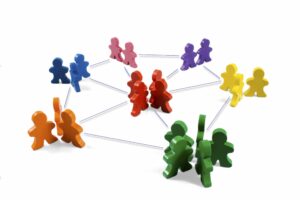 Mayor Van Bynen, the Mayor of Newmarket, received a call one day from a business owner in his community. The business was in a break out stage having developed an innovative service for the global Gaming community and needed to grow their company – fast! Their challenge was they couldn’t find any space in Newmarket that could provide adequate bandwidth for their service. It just wasn’t available and they were looking to relocate to Toronto to access the bandwidth required. Their call for help to the Mayor was a last minute attempt to find a way to stay in Newmarket. Collaborative workspaces are key to business growth.
Community Collaboration’s Rapid Mobilization Response
The Mayor immediately put a call into his trusted team of community collaborators to see what could be done. Led by the Chamber, the team of senior leaders were able to mobilize a response that not only arranged for a 1Gb internet connection where none was previously available but also provided new space for the company which was quickly expanding to 50 people. Other advisors and assistance was offered to help this company capture their opportunity and move it forward. They became the first tenant in a new Business Accelerator for the Town and are now building out a global analytics service that will provide jobs in Newmarket.
This rapid mobilization response was only possible because there was a close, trusted relationship between multiple partners. Each brought different pieces of the puzzle together quickly and in a coordinated fashion to benefit the whole community.
As per my last blog, this type of response would not have been possible 10 years ago. At that time, the partners all operated as separate institutions with very little collaboration together.
Institutions Establish the Rules of Engagement and Membership
Institutions have traditionally served as the organizing framework for bringing people together towards a common goal or cause. Currently, we are all working within an organization of some sort: a school, an army, a company, a government, or perhaps a religion. These institutions establish the rules of engagement and membership that prescribes how its members will engage with each other and how they will add value to each other.
By definition however, these institutions are exclusionary in their makeup. If you are a member, you can share in the process, tools, resources and community. If you are not a member, a citizen, an employee – you will not have access to the resources and information available thereby limiting your ability to interact effectively with that community. As a member of an institution, should we wish to work more closely with people in other institutions, we quickly run into barriers because:
- We have different rules & policies
- We have different ways of funding and rewarding value
- We have different tool sets
These institutional models are rapidly becoming limited models for the kinds of work and innovative solutions that are being demanded today.
There are ways of interacting between these large institutional organizations but these arrangements are fairly limited in the numbers of participants that can be included. Usually these take the form of partnership agreements or memorandums of understanding (MOUs), which limit the types and numbers of potential participants to a few at a time.
What happens when we want to include input from all potential stakeholders, even the ones we don’t know exist? What rules of engagement apply? What technology tools do we need to implement in order to find each other, communicate & collaborate together? Is it possible to build a Collaborative Ecosystem that provides for extensive inclusivity? Are there ways to capture the value offered by a diverse group of stakeholders no matter if they are institutional partners or individuals, if they are a small group of participants or virtually unlimited numbers?
Increasingly the answer is ‘yes’.
We require new models and new tools to manage collaboration between institutions.
Examples of Community Collaborative Ecosystems
Two examples of this type of Community Collaborative Ecosystem (CCE) that are developing can be found in Canada:
Saint John, NB
There are 5 municipalities who have come together over the past few years to establish a group of 130 partners, and growing. They include Municipalities, Chambers of Commerce, schools, businesses, other government entities, libraries, hospitals and more. All of these partners understand that they need to work together to achieve sustainable models for their economic, environmental and social environment. They have established a ‘True Growth’ model that is designed to allow all partners to add and realize value from the community in new ways, to their mutual benefit.
Newmarket, ON
As 1 of 9 municipalities in the Region of York, a small group of partners including the Town, Southlake Regional Hospital, the Chamber of Commerce and the library came together a few years ago to discuss how to better collaborate. This modest beginning has already yielded millions of dollars of benefit to the partners. More importantly however, it has established a group of community leaders that know and trust each other. They know how to collaborate in ways that were not happening previously. Where there is synergy now, there used to be distrust and suspicion. The group is now able to identify projects that will benefit the community and execute on those quickly and efficiently in ways that none of the individual partners can do on their own.
Looking at these two CCE examples as well as other similar examples, some principal requirements begin to emerge.
Building Collaborative Community Ecosystems (CCE)
Consider the CCE pyramid, at the base level, there is a requirement for a new governance model that provides for innovative flexibility between partners but also helps set the rules of engagement. We need to understand the vision and goals of the community so that it is understood what the community is working towards.
Secondly, there needs to be a technology platform that helps manage many of the organizational functions that are previously the domain of institutions and not available to individuals. Technology tools now open these capabilities to the world, crossing institutional, geographical and cultural barriers. That provides a platform for inclusivity rather than exclusivity.
Once these pieces are in place, the collaborative community can begin to execute projects that will accelerate them towards their vision and goals in ways that could not have been previously imagined. For more information on Collaborative Communities, Contact us and stay tuned for my next blog about Technology Platforms for Collaborative Communities.
What Conferencing Technologies Should be Available in Our Meeting Rooms?
We recently received an honest attempt by an organization to better understand the conferencing technology solutions available in today’s marketplace via a Request For Information (RFI). Interestingly enough, it was a relatively blank canvas asking for:
- Inventive solutions to provide high quality teleconferencing abilities for meetings and
- The ability to offer interactive webinars as an educational tool.
This is a great opportunity for us to educate and share the collaborative solutions the organization has available to them. And in this case, the blank canvas allows us to provide a multitude of solutions.
The Organization and Their Business Problem
The organization currently has meeting rooms across the province that hold over 30 people. Each room is equipped with a poor quality audio solution and they are unable to effectively connect their internal and external stakeholders using these rooms via teleconference today. They would also like to be able to do remote training. Today that can only be done through self-study materials.
The Organization’s Requirements:
- To conduct training remotely using leading edge collaborative technologies
- The only room specification provided is that a round table seats up to 35 people
- They are interested in “teleconferencing,” “webinars” and it would be nice to have distance education
This approach could result in a wide variety of responses.
Will the solutions presented meet their needs? Do they really know what they want and do they know what technology is available?
I think the answer to each of these questions is “No”.
The focus will likely be low cost approaches to upgrade their audio phones in the rooms and offerings such as WebEx or GoToMeeting. But do these solutions really give the organization the high quality teleconferencing experience they are seeking?
The Risk of Using an RFI to Educate
This organization is trying to use a purchasing vehicle to educate themselves on the products available. This method is really a “hit and miss” approach because it depends on who in the marketplace takes the time to educate them on their choices by responding to their RFI. Typically, the best price wins in an RFI unless your proposal stands out for other reasons. To make your proposal stand out, you need to really understand your buyer’s needs.
You also need a buyer who is open to suggestions and has a good understanding of their needs.
But if the organization doesn’t know what they are looking for, how will they know when a really good solution is offered?
Finding a Solution for Connecting People
Using technology to connect people is a common-place activity however the sheer number of options available to do this is absolutely mind-boggling and getting clarity on a solution is difficult to achieve.
At a high level, organizations are looking to connect room systems and individuals together over distance for real-time communication.
3 possible combinations are:
- Room system to Room system(s)
- Room system to Individual(s)
- Individual to Individual(s)
Deciding which of these conferencing technologies are required for connecting over distance is critical in determining the level of collaboration that can be achieved.
The Velocity of Collaboration
Each of these different conferencing technologies brings a different dimension of richness to the collaborative experience. Frost & Sullivan wrote a very insightful whitepaper a few years ago about the “Velocity of Collaboration”. It was a sponsored whitepaper so it had some biases in it but the conceptual model was eye opening. They spoke about 6 different real-time conferencing modalities (if you boil it down there are really only the 4 above – unless you add in virtual world collaboration, which is only used at the fringes).
Never-the-less, the Velocity of Collaboration model is very useful and we have adapted it to consider the four conferencing modalities. Part II of this blog will detail this adapted Velocity of Collaboration model.
Once requirements for user based collaboration capability are determined, you can select the meeting room technologies and the individuals connecting into conferences. This process is critical. It avoids wasted effort and brings a cohesive approach to the technology roadmap your organization requires. By turning the patchwork of technology found in most organizations into a tapestry of technology, you’ve created an enabler to greater collaboration within the organization.
The ET Group has helped many organizations through this process. Please contact us if we can be of assistance to your organization.